Perlite is a glassy volcanic rock of acidic origin that, due to the water trapped in its structure, expands dramatically when heated and reaches several times its original volume. This unique behavior makes perlite a lightweight, insulating, hygienic, and multi-purpose material. Expanded perlite is recognized by its white color and porous cellular texture and is widely used from professional greenhouse cultivation to lightweight perlite mortars and blocks, refractory mixes, and some applications in the food industry. For a deeper conceptual and industrial review, we recommend the article “What Is Perlite and What Are Its Applications?” and the specialized analysis of perlite in greenhouse cultivation.
Perlite Introduction: What Is Perlite, What Are Its Applications, and How Do You Choose the Right Grade?
On this page you can read a complete introduction to perlite; from its volcanic origin and the difference between raw perlite and expanded perlite to perlite applications in agriculture, construction, refractory mixes, and food industries. For deeper reading, we recommend “What Is Perlite and What Are Its Applications?” and “Expanded Perlite Grades and Their Applications”.
- Specialized perlite reference in Iran
- Direct links to perlite educational articles
- Free consultation for choosing the right perlite grade
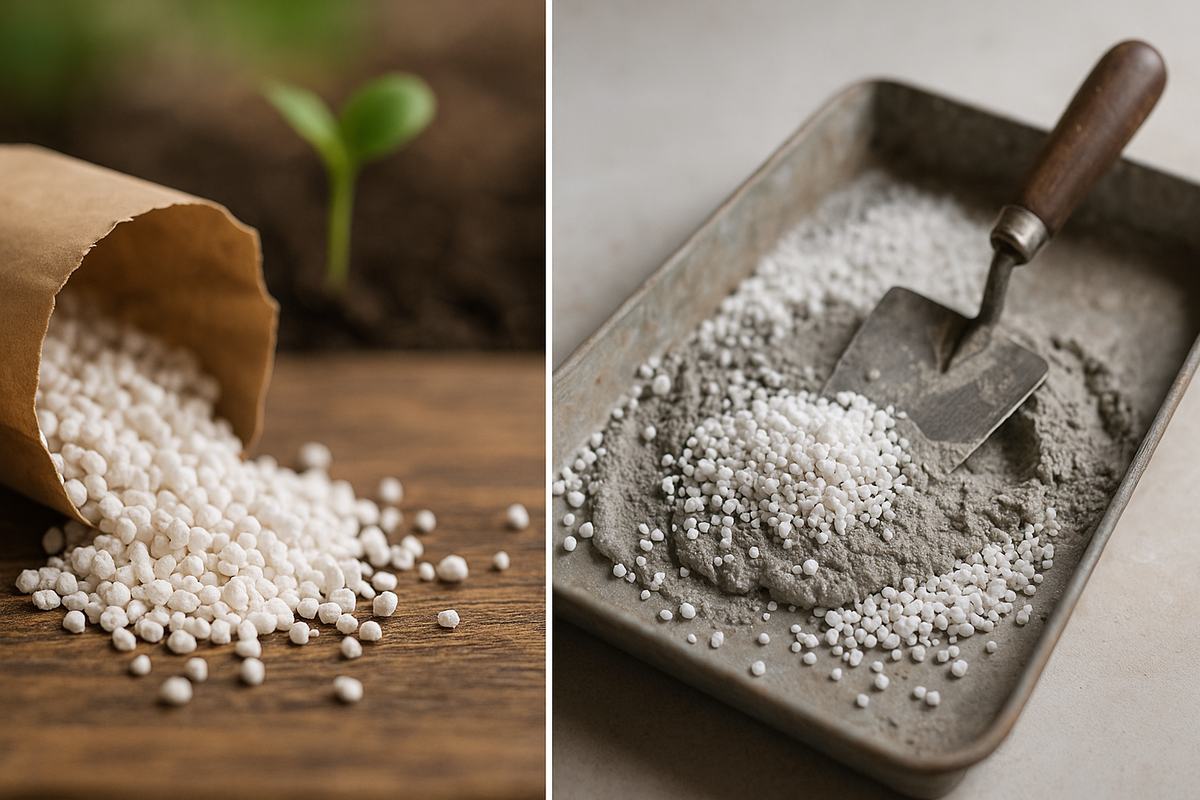
Key Features of Perlite
Why is perlite introduced in most technical references as a strategic material for agriculture, construction, and industry?
Lightweight and Thermal/Acoustic Insulation
Reduces structural weight and improves building energy and acoustic performance.
High Fire Resistance
Expanded perlite is non-combustible; ideal for fire-resistant coatings and materials.
Neutral, Hygienic and Safe
Near-neutral pH, odorless, and suitable for sensitive agricultural and industrial environments.
Unique Water Retention and Drainage Balance
Retains useful moisture while preventing waterlogging; ideal for plant roots.
Durable and Non-Degradable
Stable mineral structure that does not decompose over time and maintains performance.
Types of Perlite and Their Application Areas
In any introduction to perlite, four major sectors are always highlighted: agriculture, construction, refractory mixes, and food industries.
1) Agricultural Perlite
High porosity, low weight, and moisture retention have made perlite a core component of professional growing media. Practical ratios and examples are explained in the article comparing perlite types in greenhouses.
2) Construction Perlite
Lightweight thermal/acoustic insulation in mortars, plasters, blocks, and roof/floor fills. More details in the perlite block guide.
3) Perlite in Refractory Mixes
Used as a lightweight filler and insulator in backup refractory mixes and thermal insulation layers.
4) Perlite in Food Industries
Used as a filter aid, anti-caking agent, and carrier for additives in some food and pharmaceutical processes (with approved grades).
Perlite Grades and Particle Size (Raw and Expanded)
Selecting the correct perlite particle size directly affects performance in agriculture, construction, and refractory applications. More details in the expanded perlite grade guide.
| Perlite Grade | Approx. Size | Recommended Applications |
|---|---|---|
| Fine | 0–1.5 mm | Seeds, cuttings, seedlings, hydroponics, fine filtration |
| Medium | 1–3 mm | General growing mixes, ornamental pots, commercial greenhouses |
| Coarse | 2–5 mm | Lightweight mortars and plasters, perlite blocks, floor/roof fill, pot drainage |
Before making a final grade selection, it is recommended to review project or cultivation conditions with the technical team of Abtin Perlite.
Key Perlite Applications in Industry and Agriculture
This section reviews perlite applications in agriculture, construction, refractory mixes, and food industries in a practical, project-oriented format.
Perlite in Agriculture
Common Uses
- Greenhouse and horticultural growing media (mixed with cocopeat/peat moss for aeration and uniform moisture retention)
- Cuttings and nurseries (faster rooting, reduced clumping, and prevention of root suffocation)
- Hydroponics as a neutral and stable medium
- Home pots, cactus and bonsai (better drainage and prevention of root rot)
Suggested Mixing Ratios
Advantages
- Better root aeration and reduced soil compaction
- Uniform moisture retention and reduced irrigation frequency
- Nearly neutral pH, non-degradable, and lightweight substrate
Further Resources
Perlite Applications in Construction
Applications
- Lightweight insulating mortars and plasters (thermal and acoustic)
- Lightweight fill for floors and roofs, leveling, and secondary insulation
- Lightweight perlite blocks and prefabricated walls
- Fire-resistant coatings and lightweight suspended ceilings
Sample Mixing Ratios
Execution Notes
- Use low-speed mixing, add water gradually, avoid excessive vibration
- Proper curing and a final protective layer against direct moisture are recommended
Related Reading
The Role of Perlite in Refractory Mixes
Function and Role
- Lightweight filler and insulator in backup thermal insulating refractories and lightweight layers
- Reduces density and improves workability for greater thickness with less weight
Common Parameters
Execution Notes
- Gentle mixing to preserve porosity
- Stepwise drying and preheating according to procedure
- Compatibility with alumina/silica-based systems and other fillers
Quick Reference
Perlite in Food Industries
Applications
- Filter aid: Filter aid: clarification of juices, beverages, water, and oils
- Anti-caking agent: Anti-caking agent: improves powder flow and prevents sticking
- Carrier for additives: Carrier for additives: helps uniform distribution of dry additives
Considerations
- Use food-grade perlite and follow relevant standards
- Select particle size based on flow rate, pressure, and output quality
- Properly selected grades do not affect taste or odor
Reference Link
Perlite or Vermiculite?
- Perlite: Perlite: stronger aeration and drainage; ideal for preventing root rot and lightweight formulations.
- Vermiculite: Vermiculite: higher water retention; suitable for some wetter media.
- In many systems, mixing perlite with peat moss/cocopeat creates the best balance.
Frequently Asked Questions About Perlite
Common questions raised when learning about or buying raw and expanded perlite